Hummingbirds in Colombia: Best places to see hummingbirds in Colombia
Winter is a great time to go to Latin America to soak up the sun and see hummingbirds, especially in Colombia!
Have you enjoyed a deliciously happy summer watching the hummingbirds at your feeders and out on bird walks? I found a little garden oasis in Estes Park, behind the Colorado Games Company, teeming with hummingbirds. I confess, my 24-year-old and I carried our lawn chairs to the walking path and planted ourselves on the edge to watch the hummers for three hours one afternoon (and read our books while listening to the bubbling creek, it was heaven). My reward was this lovely Broad-tailed Hummingbird with attitude, I love that I caught one photo with the tongue sticking out at me!
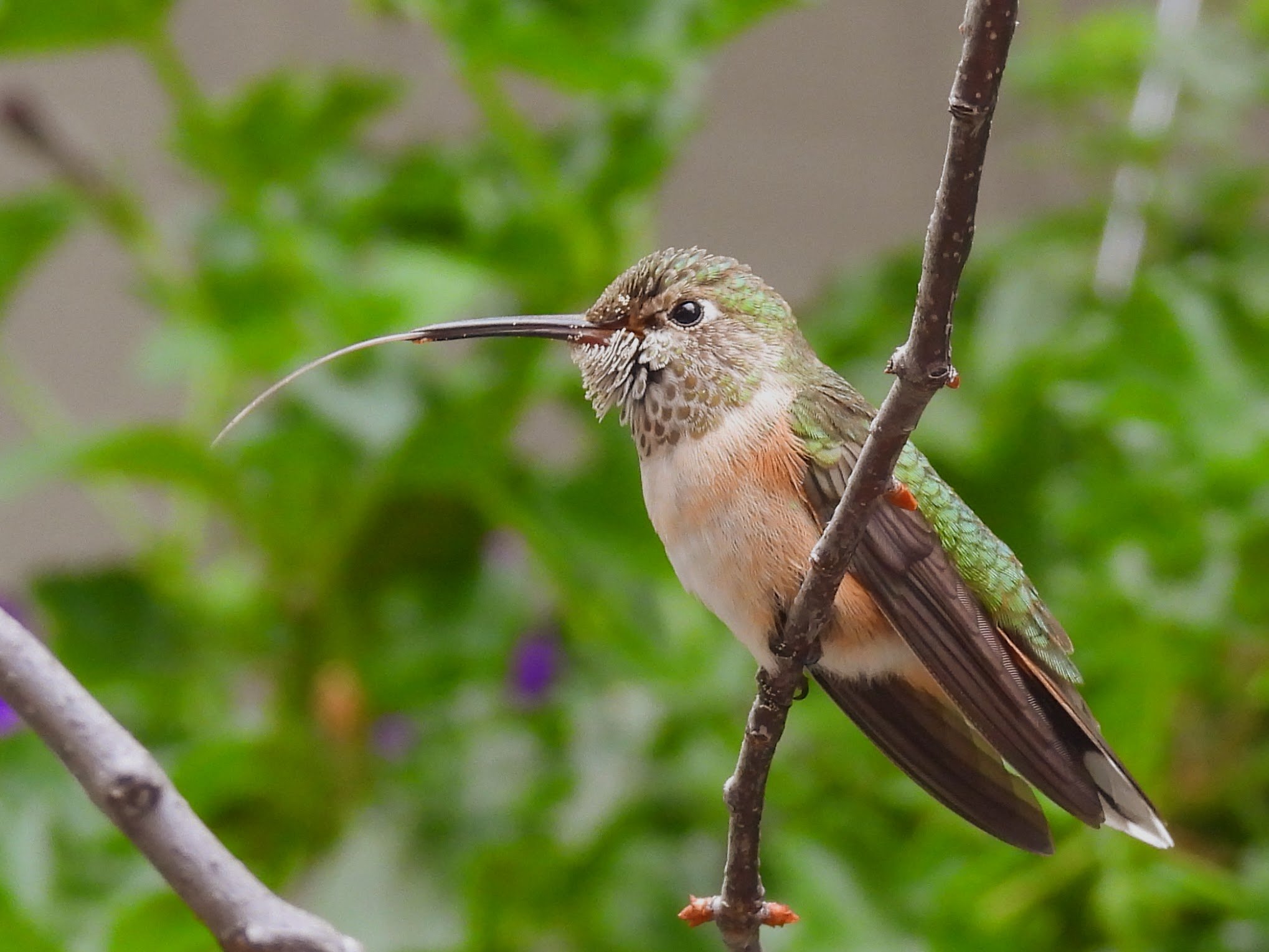
Broad-tailed Hummingbird, Estes Park, Colorado, August, 2026.
Well, as we say goodbye to summertime and the Colorado species of hummingbirds: Rufous, Broad-tailed, Black-chinned, and Calliope, we look forward to their return in the spring.
Colombia has the highest number of hummingbird species
A few of us in the Boulder Bird Club are headed to Colombia in January 2027 to see other members of the species. Even Jamie Simo, from Front Range Birding and Optics, will be joining us on a Vive Más tour. Colombia is a hummingbirder’s paradise. There are more than 160 species identified, as compared to ~50 species in Costa Rica. Ecuador (just to the south) is a close runner-up, with 132 species.
Salento for Hummingbirds
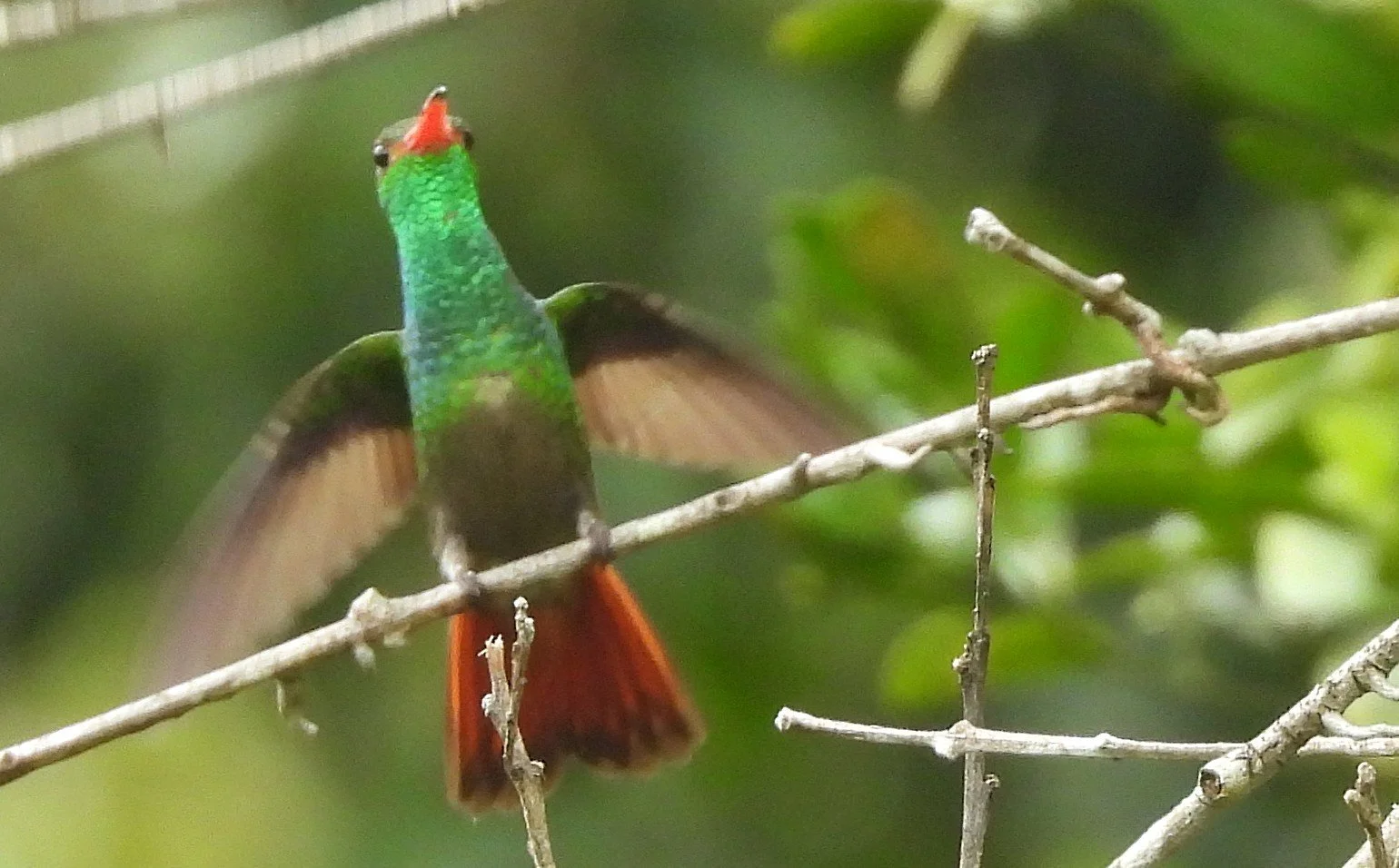
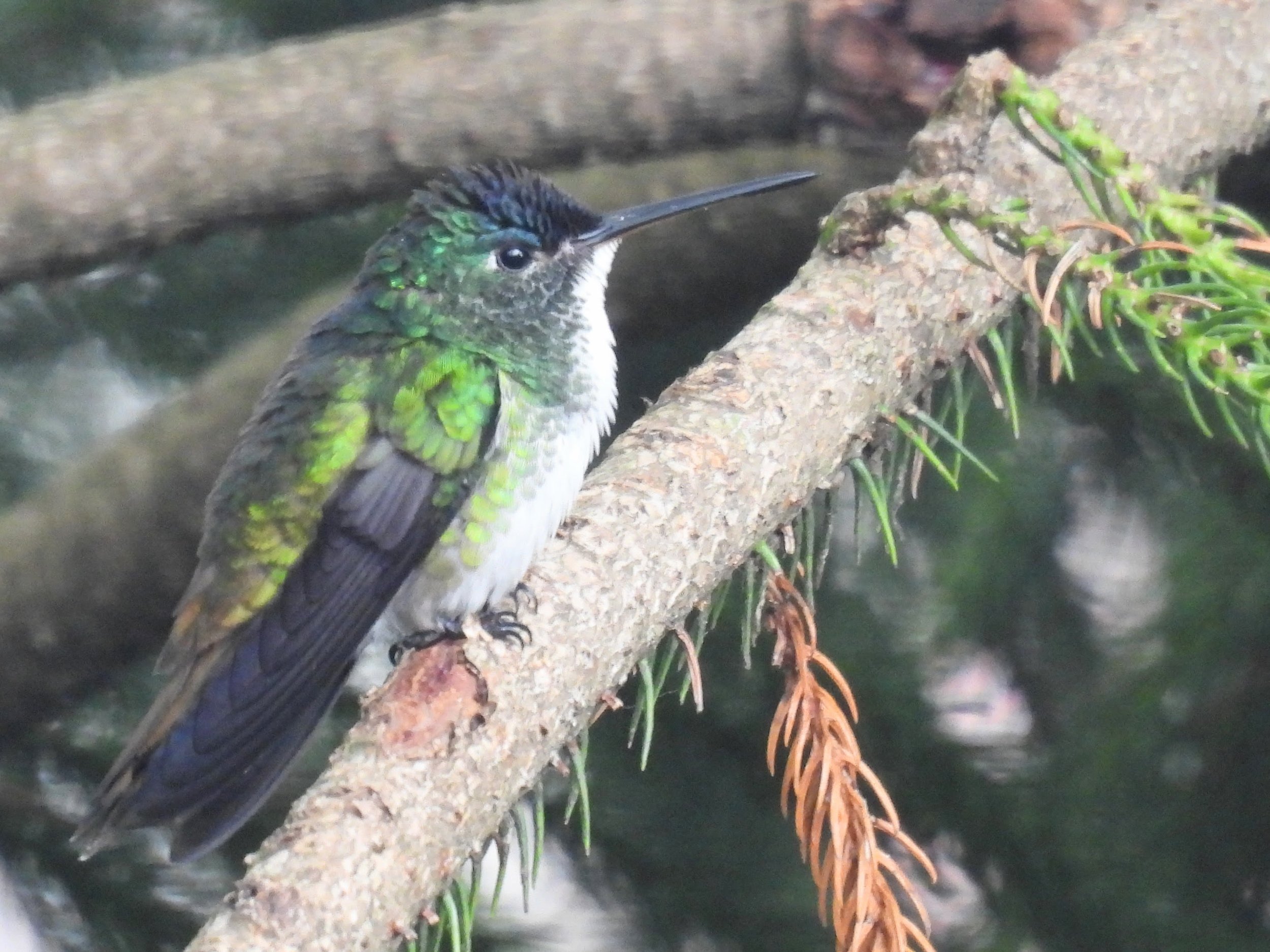
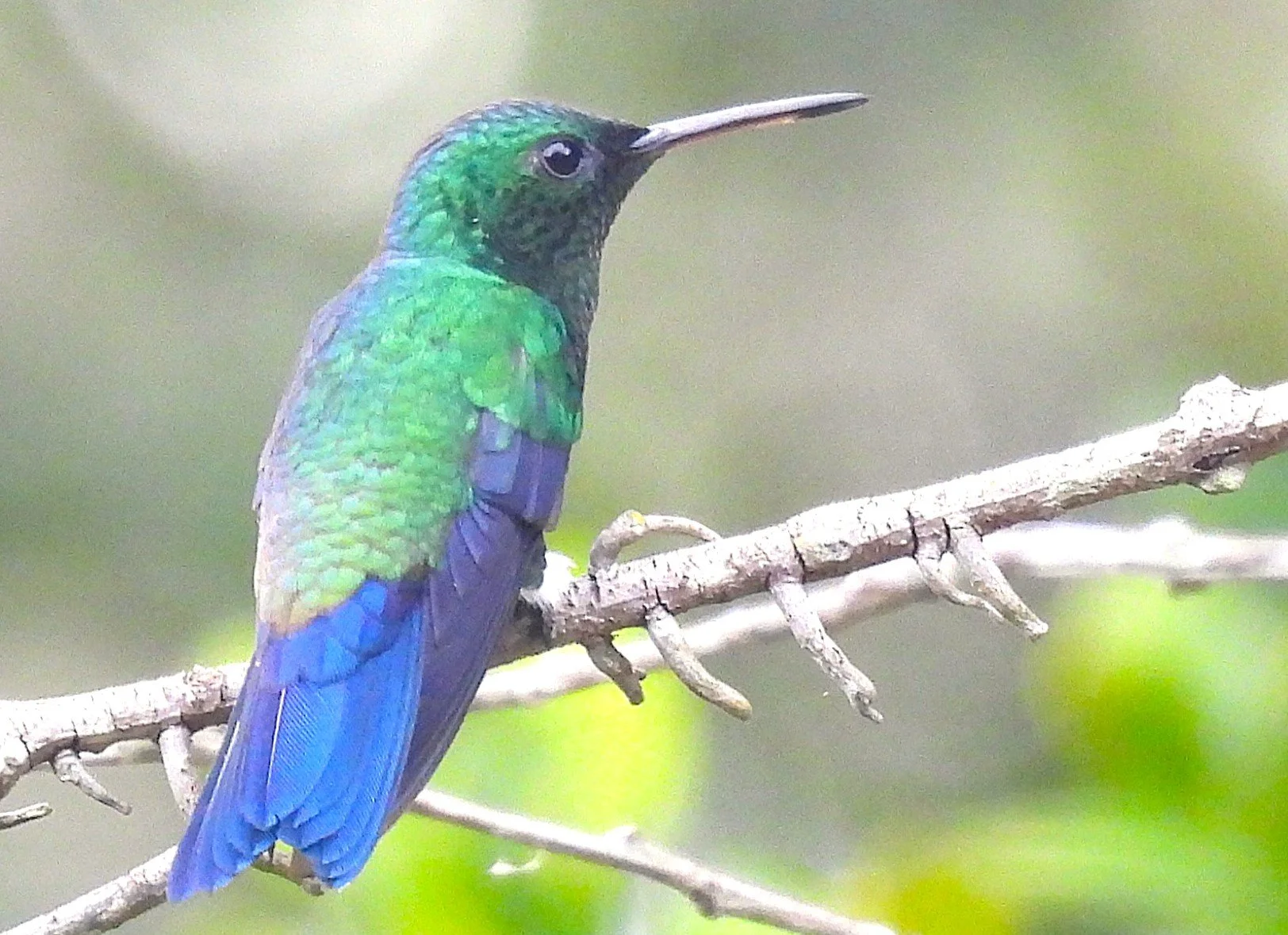
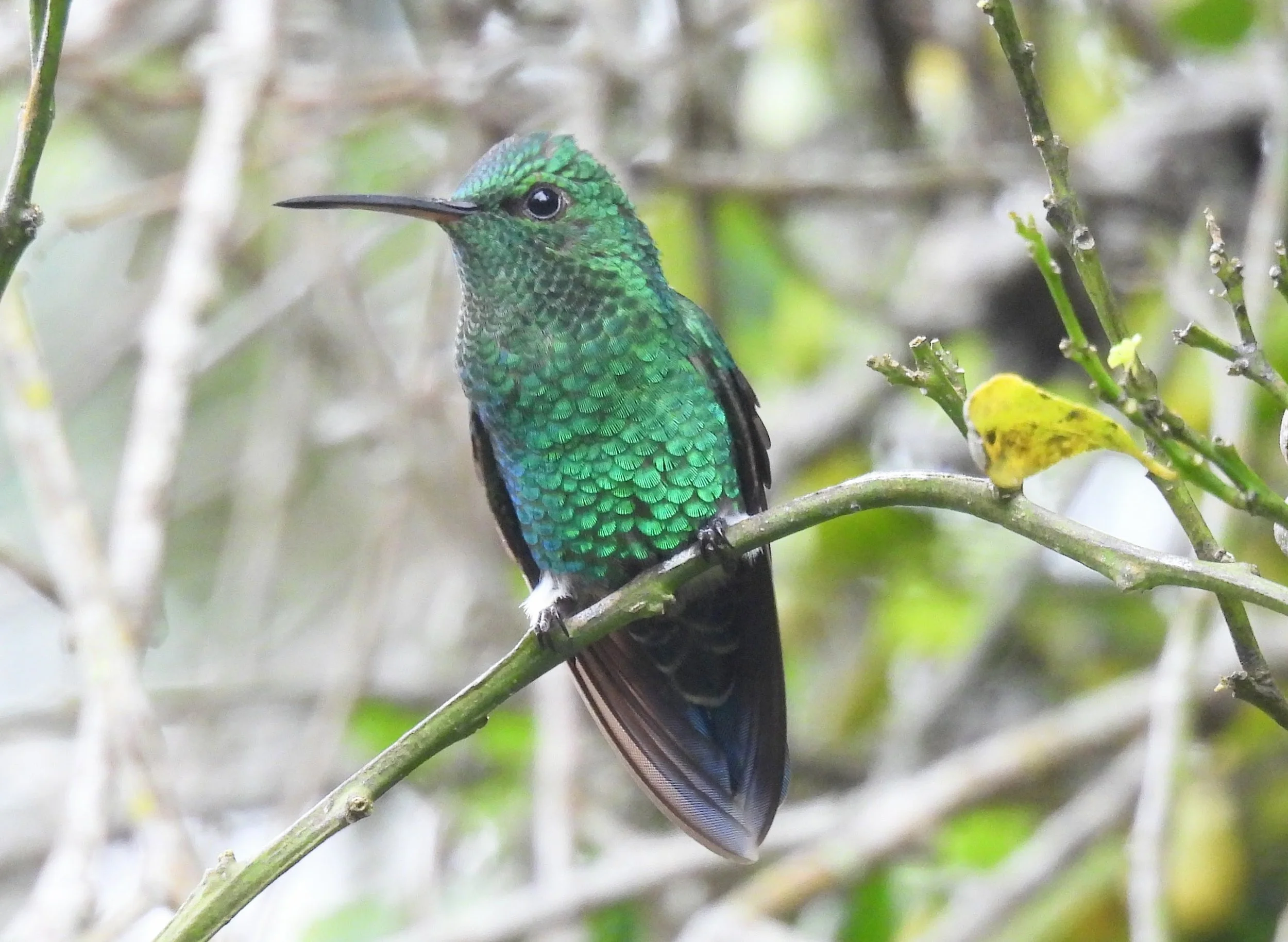
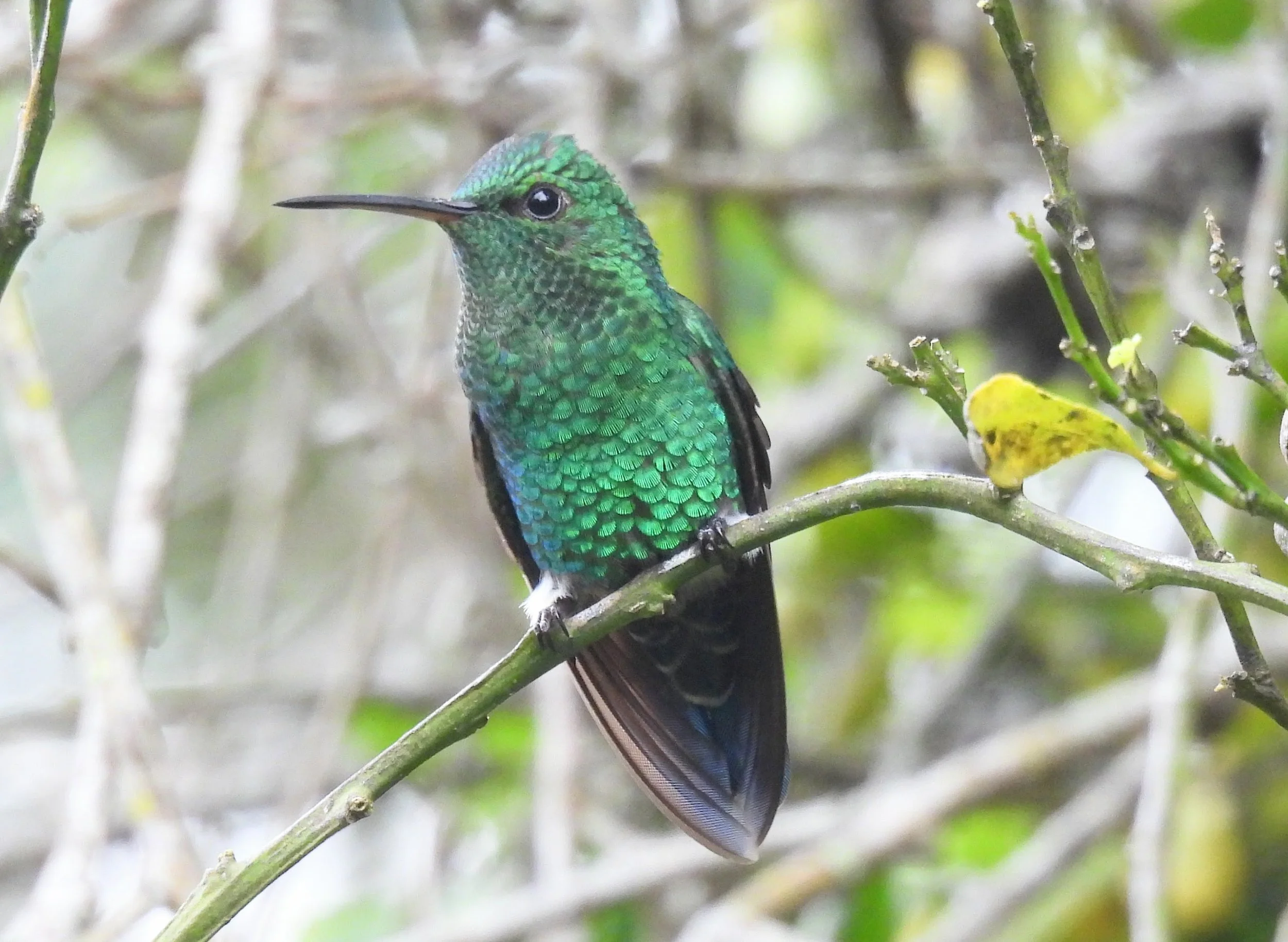
Before I started visiting Colombia, I didn’t know there were hummingbirds with racket-tails, boots, or even tails three times the length of their bodies. Then I went to the Quindío region, in the heart of the Coffee Triangle in the Andes. On a visit to the Cocora Valley (6,000 feet in elevation) near Salento, I saw my first Long-tailed Sylph. How does a little bird fly with such a long tail? We were in the cloud forest, so it was backlit, but I got the photo. In this area I’ve also seen the Andean Emerald, Steely-vented, and Rufous-tailed Hummingbird (common in Colombia).
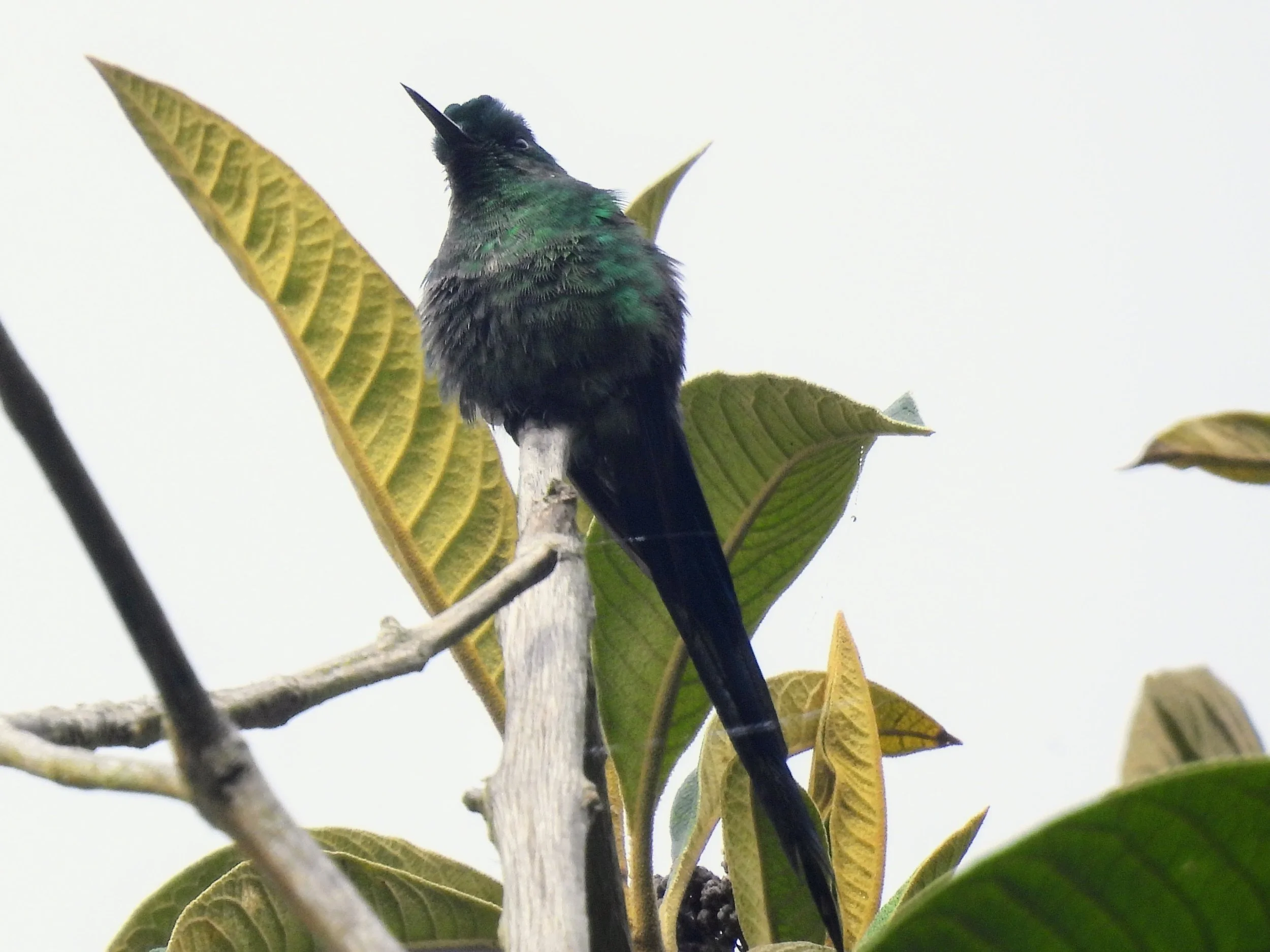
Long-tailed Sylph, Cocora Valley, Colombia, January 2025.
On another trip, while sipping locally grown coffee, a White-bellied Woodstar visited the orange Red Hot Poker flowers by me, sipping the nectar. We both felt rejuvenated after those treats!
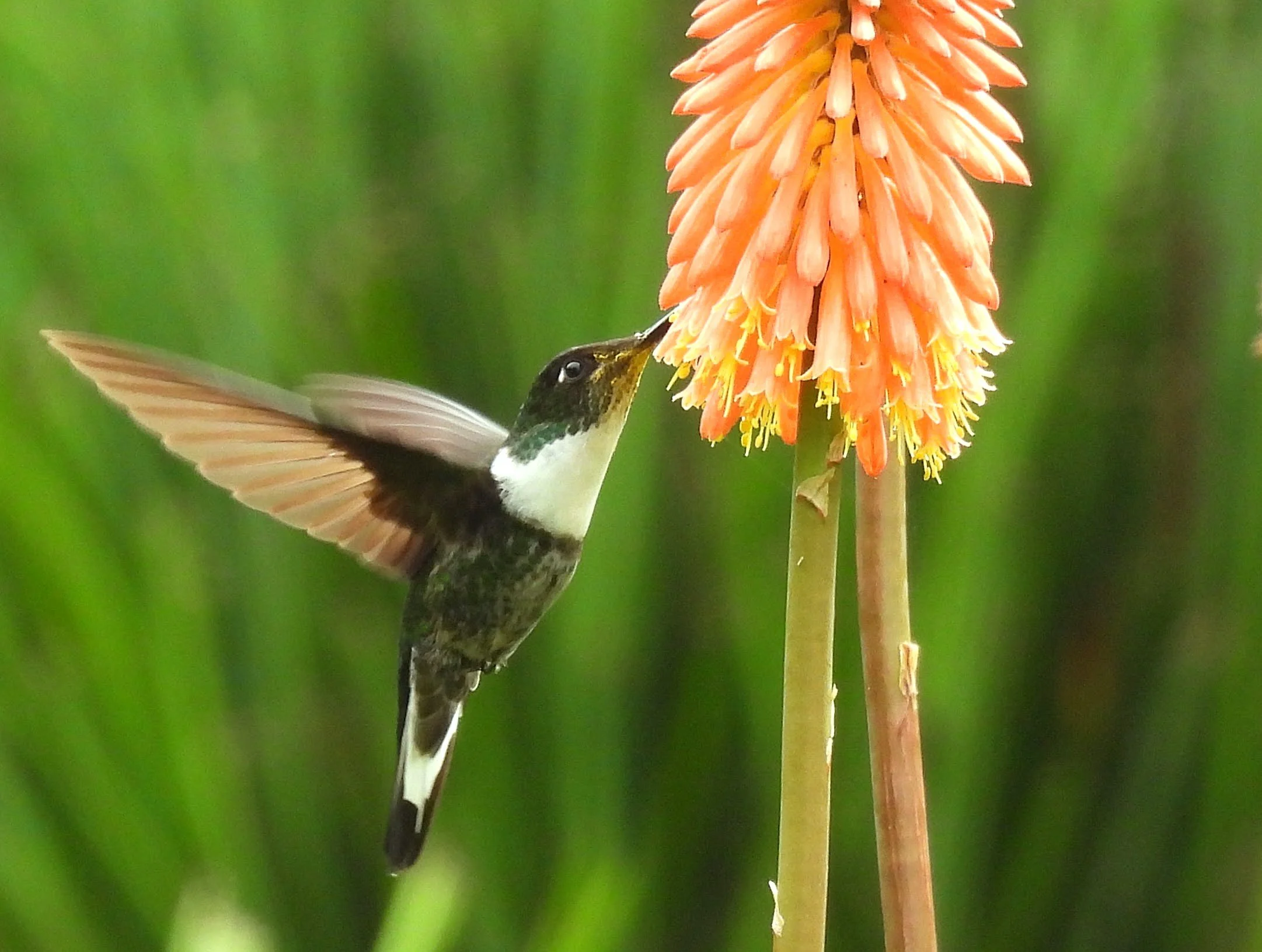
White-bellied Woodstar, Cocora Valley, Colombia, January, 2026.
Racket-tail Hummingbirds
Did you know there are “booted” or “puffleg” hummingbirds? Carlos, our bird guide, and I were perplexed by this little hummer we saw whose dainty little feet had white leg warmers. It reminded me of looking at the legs of juvenile eagles to determine if they are feathered like a Golden Eagle, or more bare like a Bald Eagle. After some research, we discovered this is a female White-booted Racket-tail. The females don’t have long racket-tail feathers, so that’s what stumped us at first (I think of motmots where the tail feathers look like they're ready to play tennis). Now I regret not sitting myself in that spot in the woods to watch for a male with his extreme tail feathers. That’s still a gap on my life list.
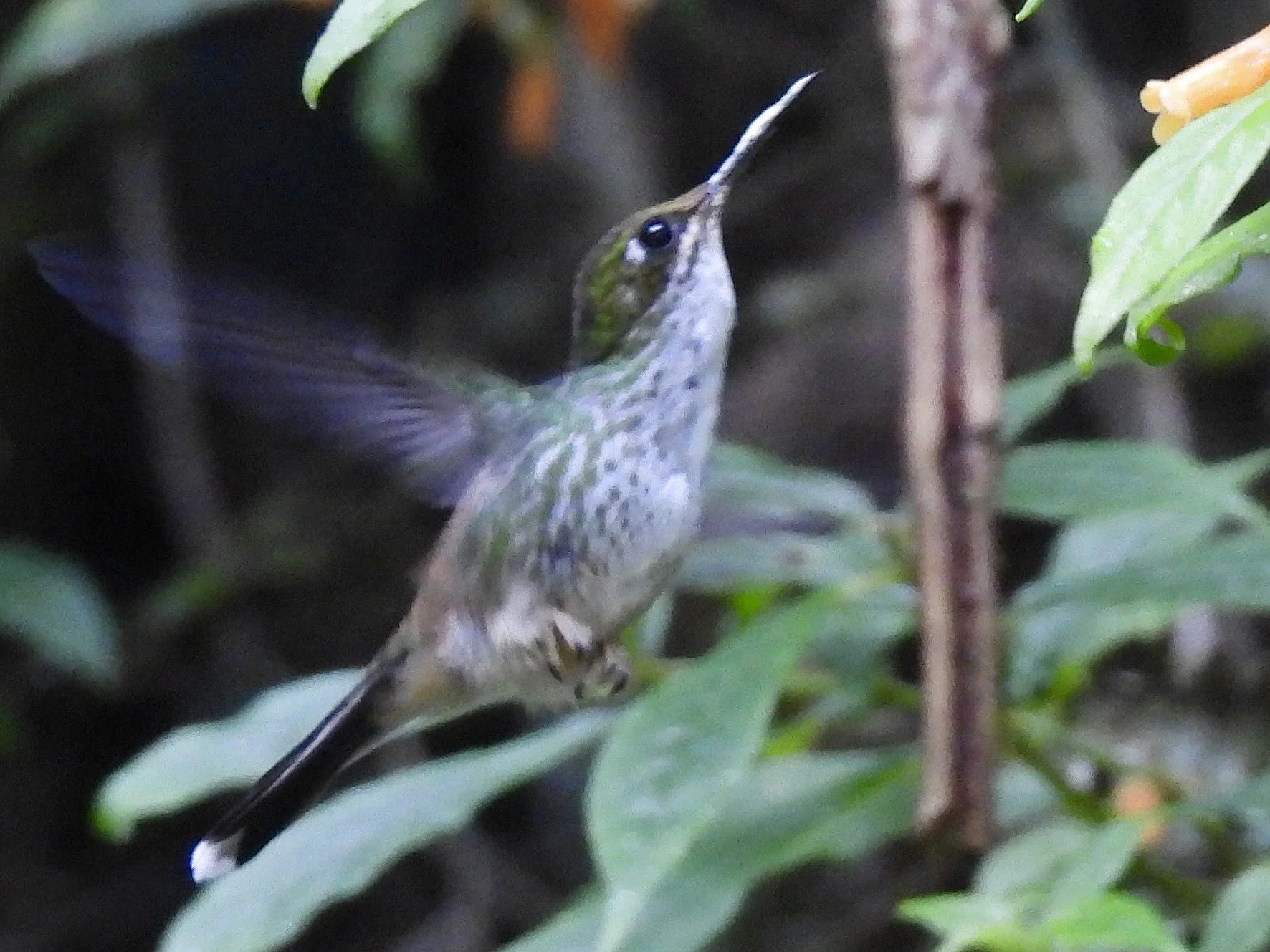
Female White-booted Racket-tail Hummingbird, Salento, Colombia, January 2026.
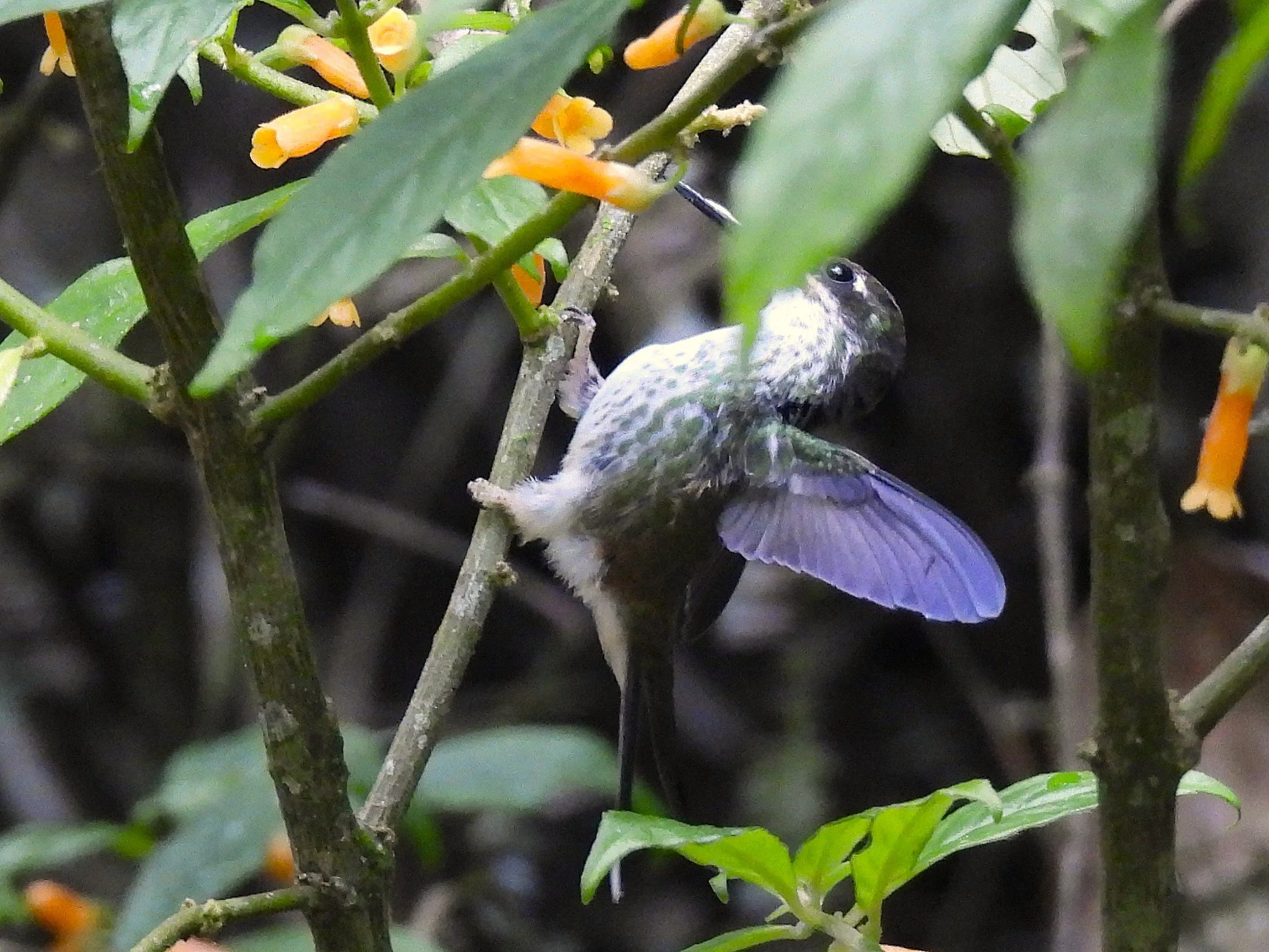
Better view of the “snow boots” on the Female White-booted Racket-tail Hummingbird, Salento, Colombia, January 2026.
Indigenous people of the Santa Marta region
Another favorite place of mine is in the northeastern department of Magdalena, the one-road town of Minca. This is only 2,000’ in elevation, and from some viewpoints you can gaze out and see the ocean beyond Santa Marta, only 10 miles away. These are the Sierra Nevada mountains, where some peaks hit 18,000’ and are home to four indigenous people groups, descendants of the Tayrona people. There are many little communities tucked away in these mountains that have maintained many of the daily practices and lifestyles of their ancestors. Their close connection with nature is a hallmark attribute.
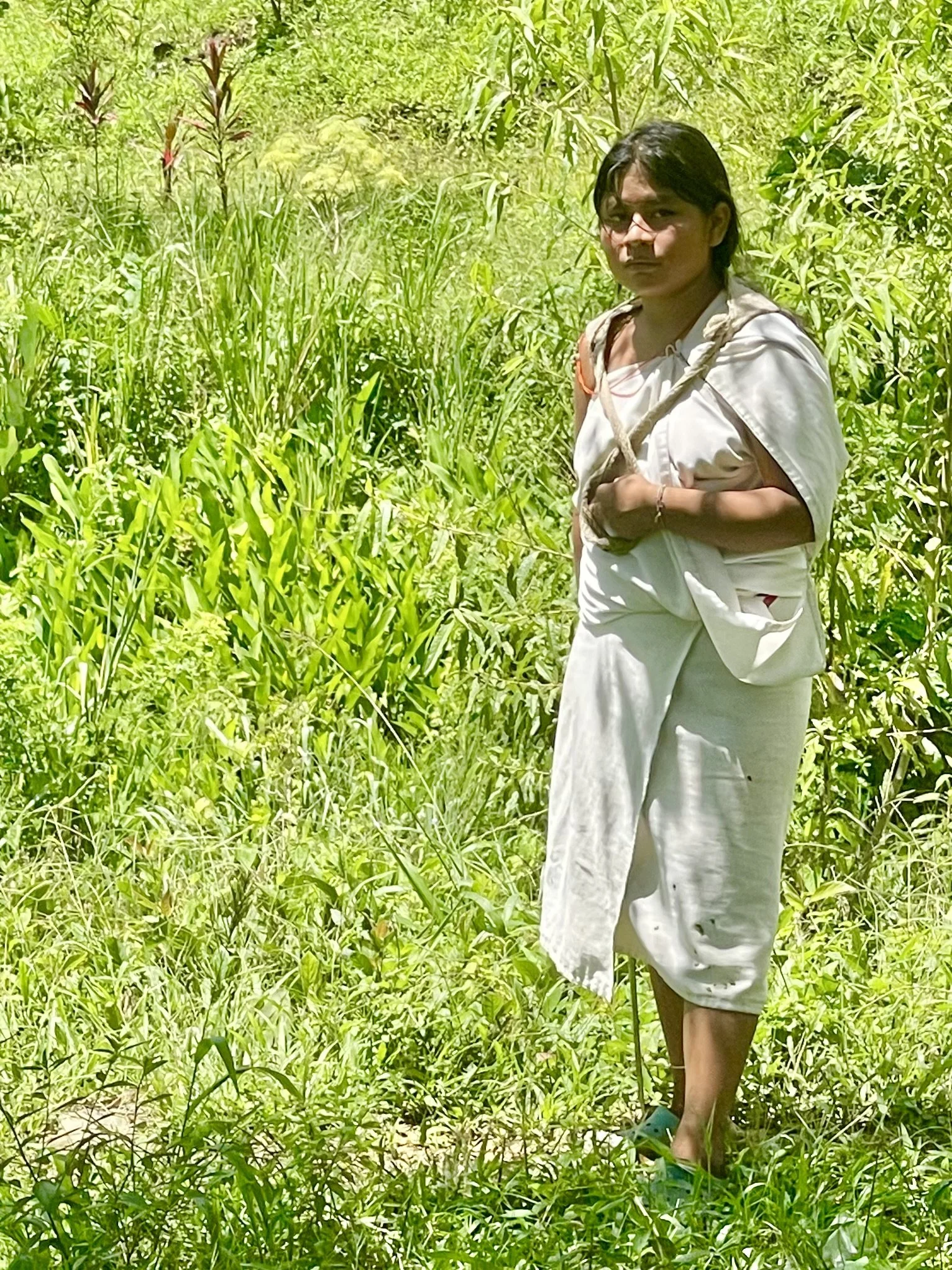
Kogi girl (from one of the Tayrona indigenous groups).
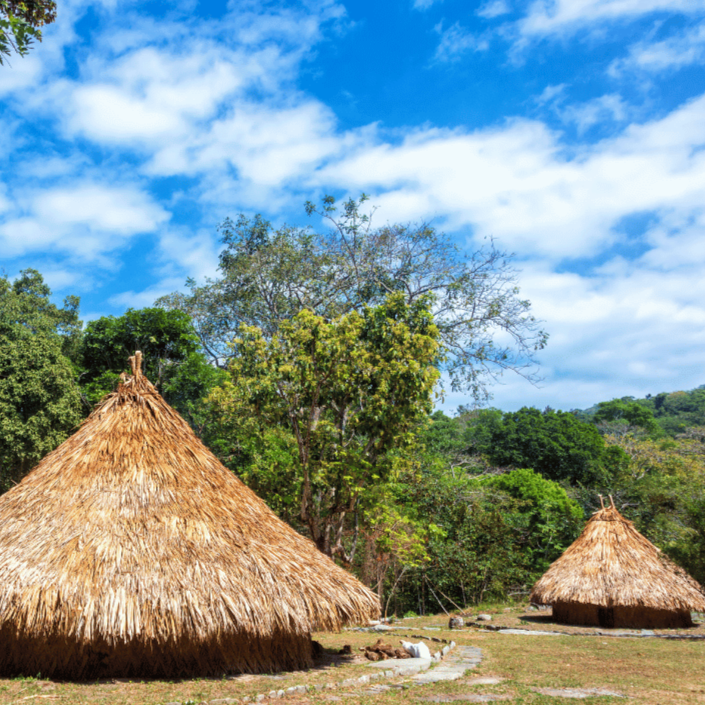
Typical home for indigenous people in the Sierra Nevadas of Colombia.
Birdwatching in Minca
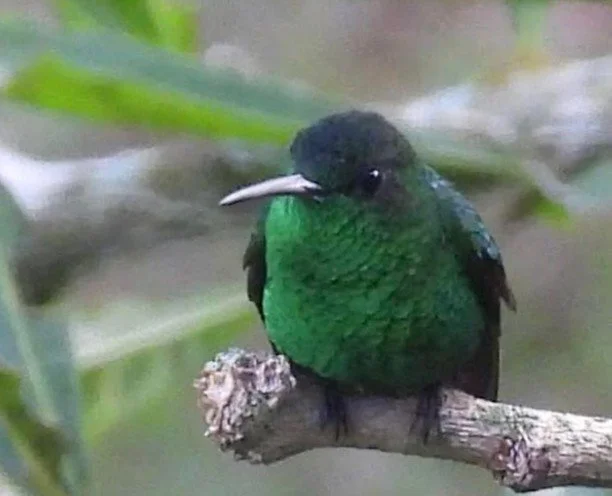
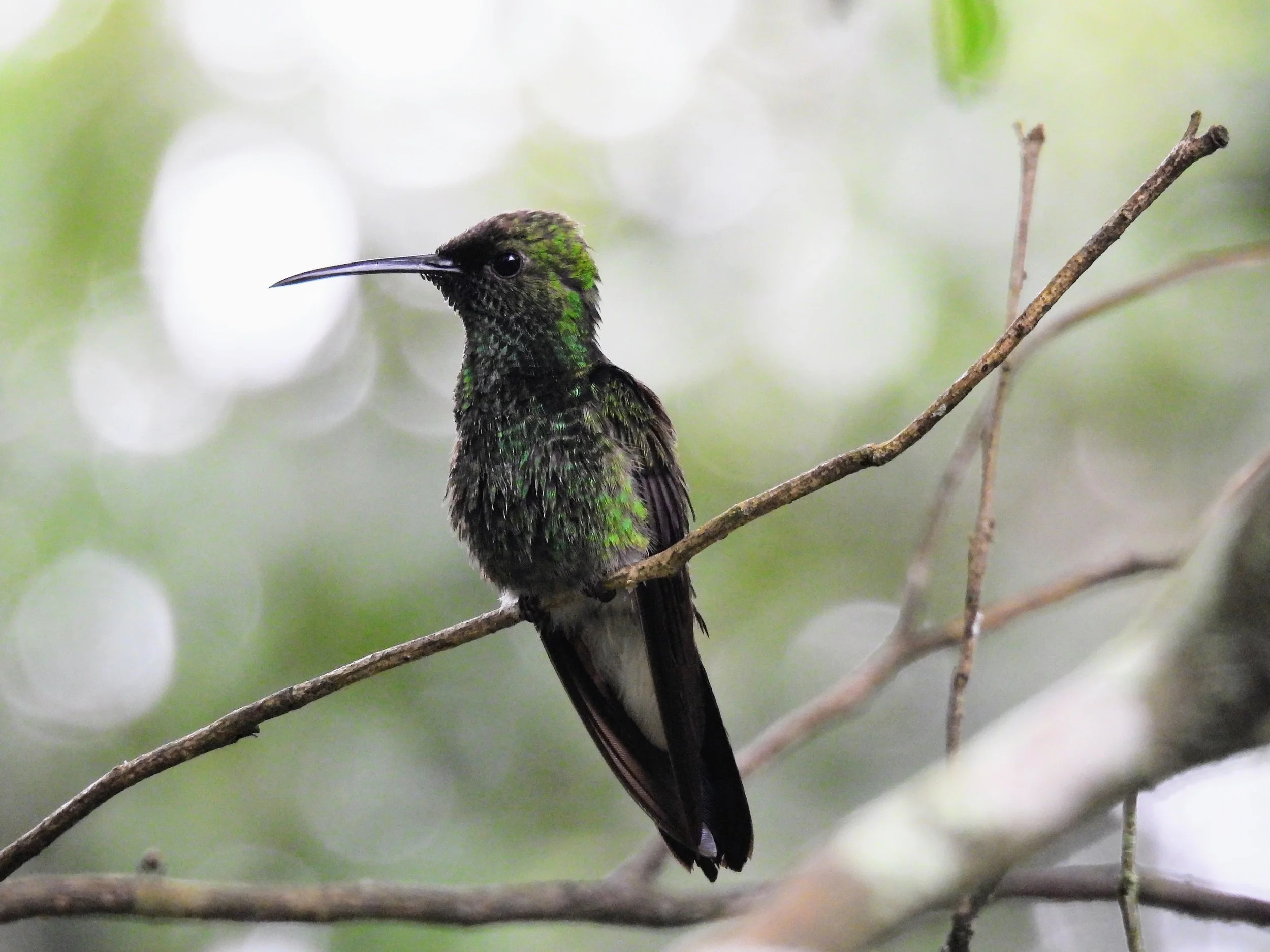
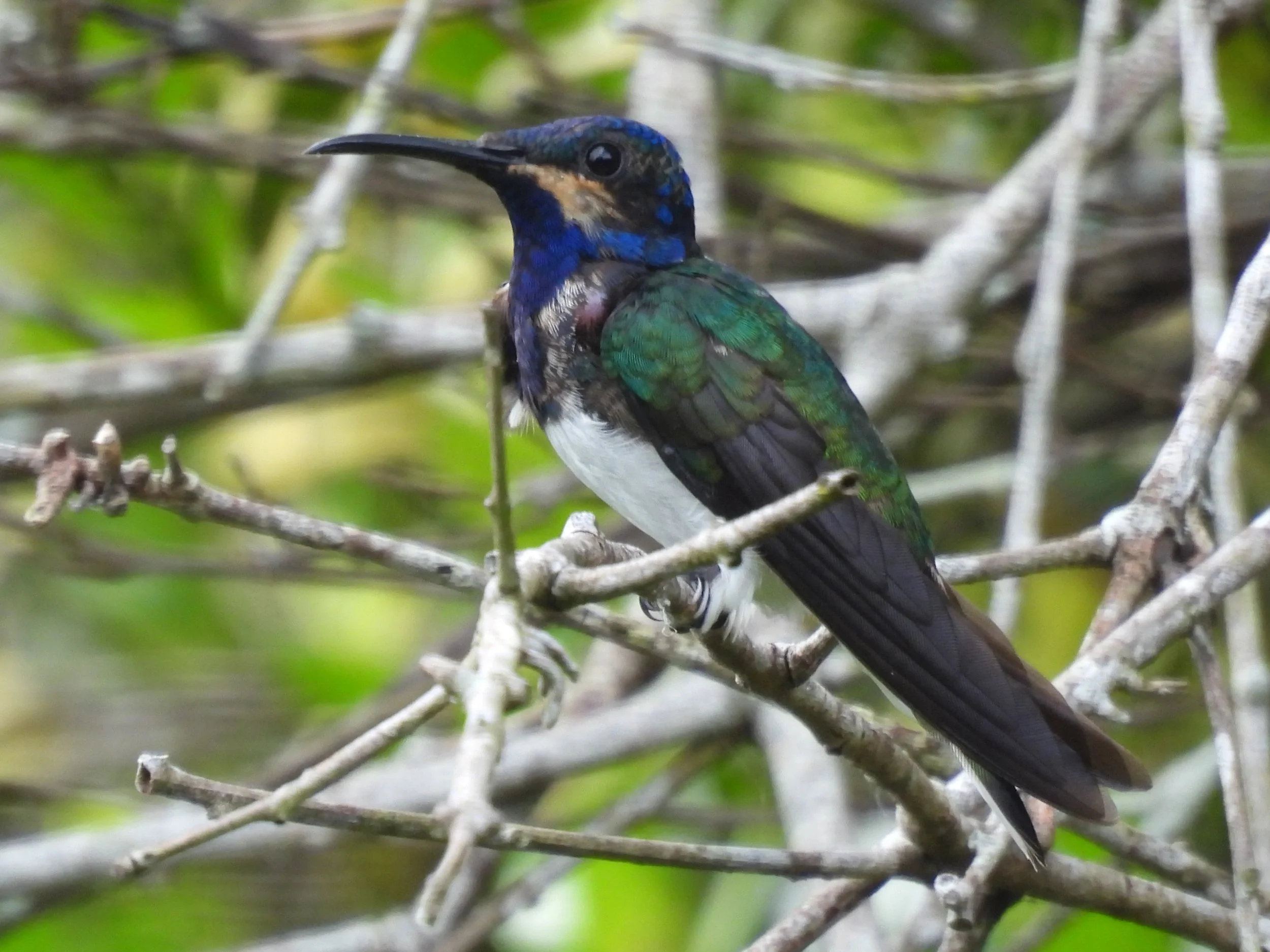
The town of Minca is where you’ll find me sitting on the patio at my favorite restaurant watching (my favorite!) the large White-necked Jacobins flitting about. These impressive hummers weigh 6-9 grams, nearly double the weight of our Broad-tailed Hummingbirds at 3-4 grams. You are also likely to see the Crowned Woodnymph and Scaly-breasted Hummingbirds in this area.
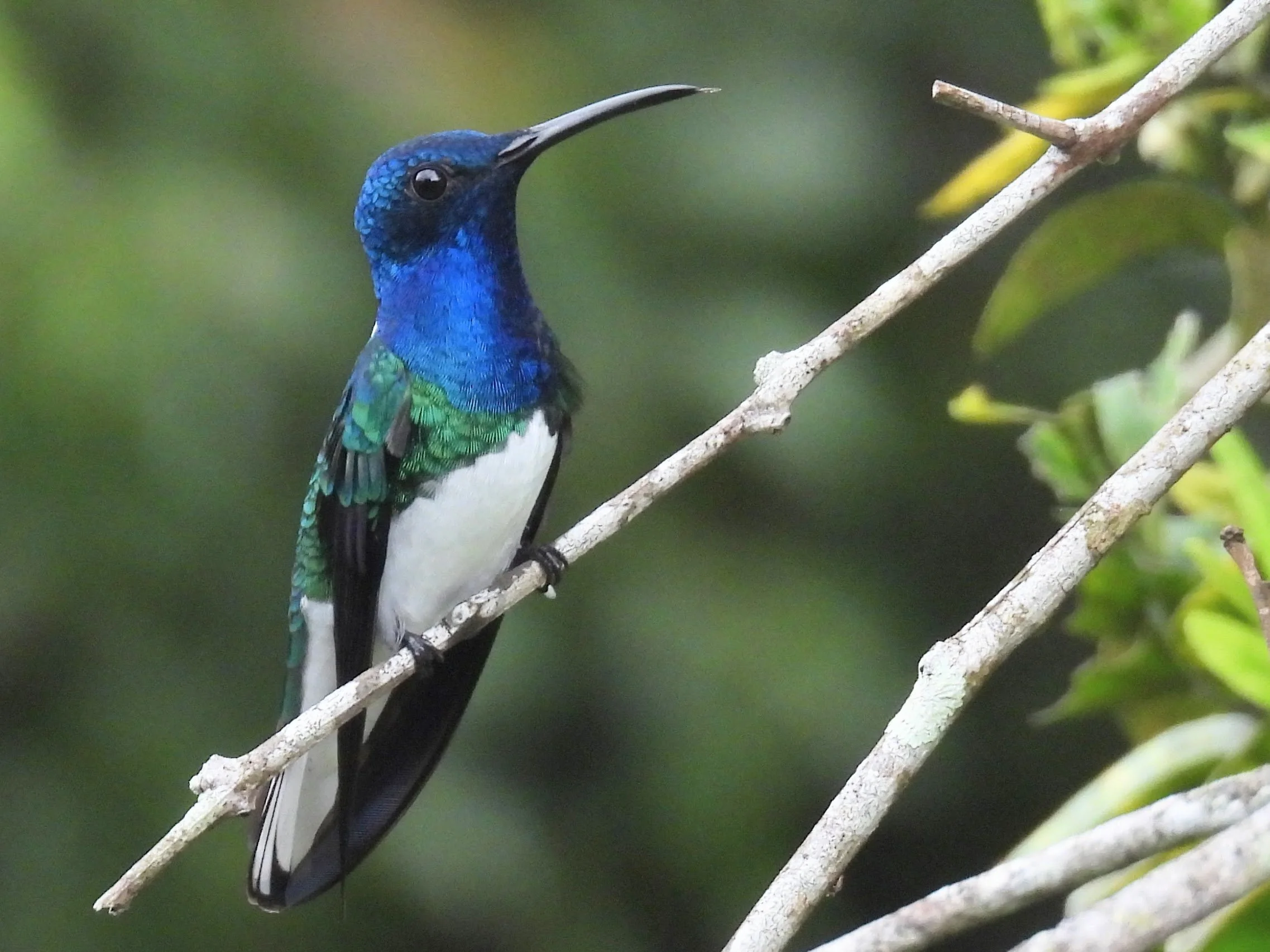
White-necked Jacobin, Minca, Colombia, November, 2025.
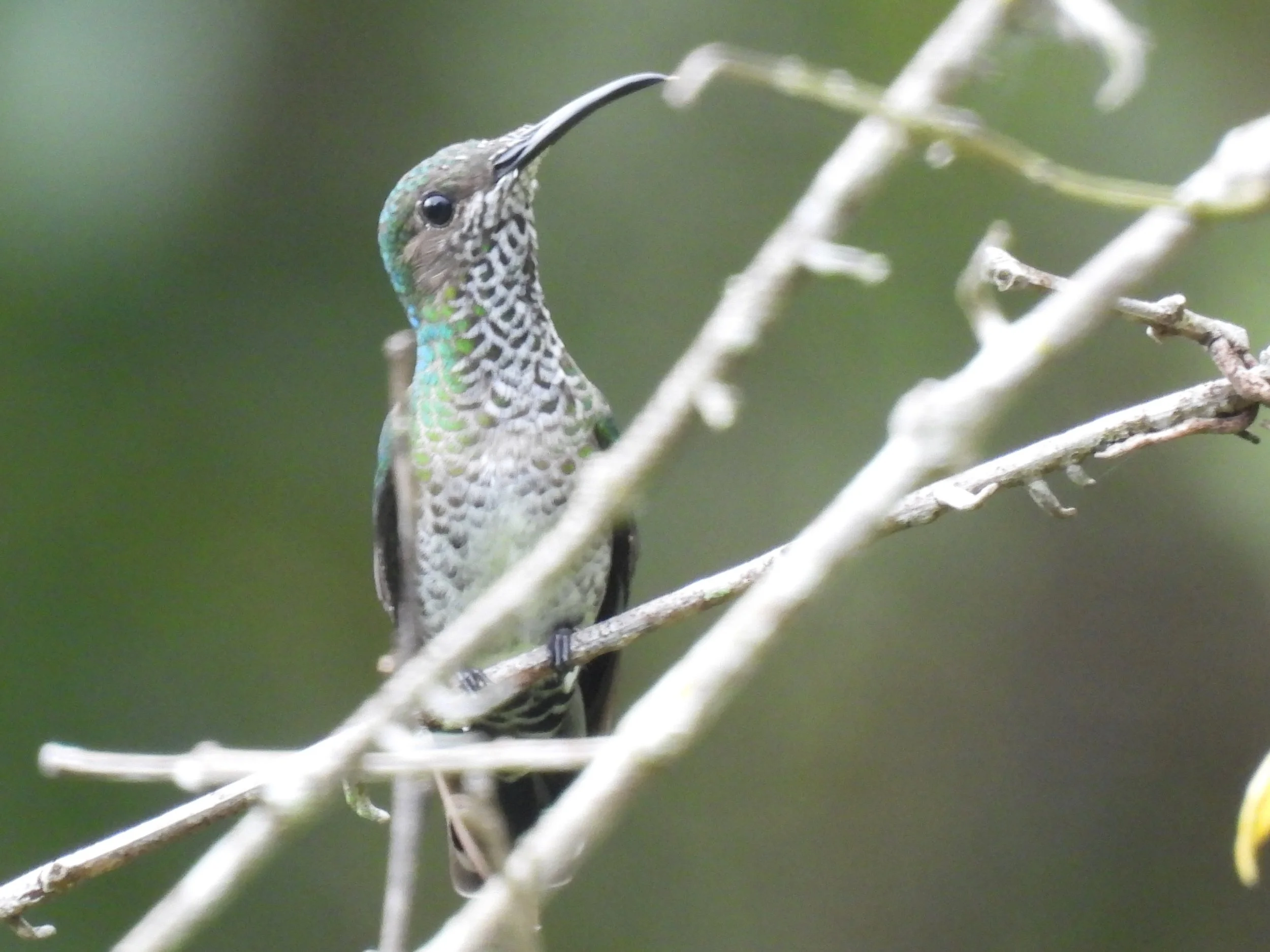
Female or juvenile White-necked Jacobin, Minca, Colombia, November, 2025.
As you ascend the Sierra Nevadas, you find hummingbirds that have adapted to what most birds cannot, the thin air above 12,000’. One example is the Blue-bearded Helmetcrest, which has specialized hemoglobin that binds oxygen in this air. I’ll admit, I may never see a Blue-bearded Helmetcrest, because they are known to live in hard-to-access areas high in the Sierra Nevadas.
Here’s to travel that brings us closer to hummingbirds this winter. Whether you venture down into Colombia (with us!), other Latin American destinations, or to Arizona or Texas, I hope you are able to see some winged jewels. In late October, after the last of the migrants have stopped by for nourishment, I’ll pack away my Colorado backyard sugar-water feeders and look forward to our miniature visitors next summer. In the meantime, it’s a good reason to travel this winter. Join us!